
 amy771937
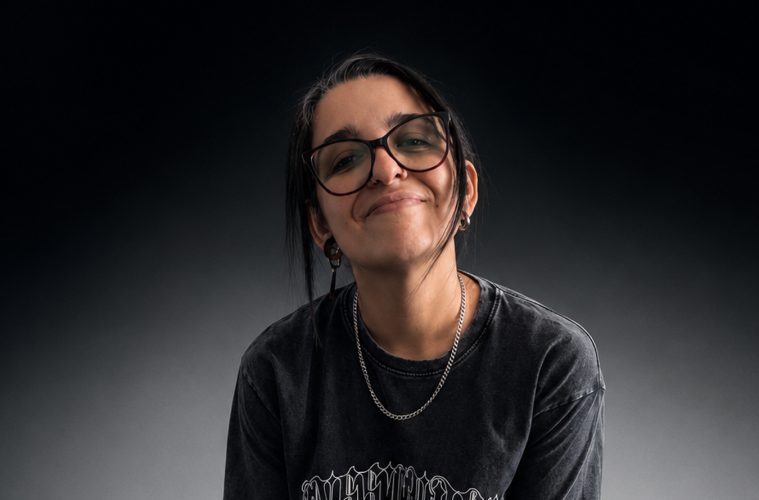
Based in Santiago, Chile, Cami Márquez is a DJ and producer carving out her own space between the relentless intensity of Hard Techno and the euphoric energy of Hard Trance. Driven by powerful basslines, hypnotic melodies, intense vocals, and high-BPM rhythms, her sound is built to move both the body and the mind.
With more than 20 releases on international labels including The Acid Mind, Eclipse Recording, BackinBlack, TeoriaPerfekta, Dynamic Mind, Severus, Redlof, and Future Techno Records, Cami has developed a distinctive style that balances darkness and intensity with melody and emotion. Her DJ sets follow the same philosophy, taking audiences through immersive journeys where energy and atmosphere remain at the forefront.
Beyond her own productions, Cami is also the founder of Inherente Project Records, giving her another avenue to discover new artists, develop releases, and support music with a strong sense of identity.
We caught up with Cami to explore her creative process, her approach to Hard Techno and Hard Trance, the importance of authenticity, her work with Inherente Project Records, the artists she believes deserve more recognition, and her thoughts on AI and the future of electronic music.
How would you describe your musical style and the genres or subcultures that most influence your sound?
My sound moves mainly between Hard Trance and Hard Techno, although I like to draw elements from different styles without feeling too limited by a specific genre. I’m strongly influenced by Techno and Trance, but I like to push those elements toward a faster, darker, and harder sound. I’m very drawn to energy and hypnotic sounds, while always trying to maintain a melodic and emotional side as well.
Describe the primary setting or environment where your music is conceived. Is it a chaotic, overstimulating studio, a minimalist digital space, a rehearsal room, or a more isolated location?
All of my productions are created in my home studio. It’s a very personal space where I can concentrate and fully focus on what I’m doing. It’s a small studio, but it has everything I need: a space for producing, another for mixing, and lighting and an atmosphere that makes it feel much more welcoming.
It’s important for me to feel comfortable in that space, because I spend many hours there developing ideas and working on my music.
When you create, what leads the way – a feeling, a story, or the sound itself?
Usually, when I start a production, I already have an intention in mind, and it is often connected to my mood. Some days I feel like making really hard Hard Techno, while other days I’m more drawn to Hard Trance, Trance, or simply trying something different.
Once I decide to produce, I open Ableton and let the process flow naturally. I start by building rhythmic foundations, experimenting with melodies and different sounds until I find an idea I like. From there, I develop the track based on what that initial idea makes me feel and where I sense it wants to go.
What’s in your toolkit? Share the gear, gadgets, or software you can’t create without.
Mainly Ableton Live. It’s the DAW I feel most comfortable producing in; I find it very intuitive, and its native plugins are really good. I think it would be very difficult for me to switch to another DAW at this point, both because I’m so used to it and because it’s so deeply integrated into my creative process.
I also use FabFilter plugins and Serum a lot, and they’ve become essential tools in the way I work.
Are there any unexpected or dream collaborations hidden in your work?
It would be a dream for me to collaborate with SWART someday. I really love his music and the way he builds energy; in fact, I think there’s almost always one of his tracks in my sets.
I feel like his sound connects strongly with what I like to express as a DJ and producer, so it would be a very special collaboration for me.
Are there any side projects you’re working on?
Yes, one of my main side projects is Inherente Project Records, the label I founded, which also plays a very important role in my life within music.
It allows me to work from a different perspective: discovering artists, listening to new music, developing releases, and helping create space for projects with a strong identity.
I also feel that the label has influenced me a lot as an artist, because constantly listening to new music and working with other producers really broadens my perspective.
Who’s an emerging artist you think deserves more recognition right now?
Ominousboy, a Chilean producer who has been making music for several years. Although his career as a DJ is still growing, his productions are already at an incredibly high level.
He has a very distinctive sound, excellent production quality, and has released music on some great labels. I feel he still doesn’t receive the recognition he deserves within the scene for the level of his work.
What role does ‘rebellion’ or ‘counterculture’ play in your music? Are you aiming to challenge commercial norms, sonic structures, or societal expectations?
I think rebellion is present mainly in the freedom to make the music I truly want to make, without thinking too much about whether it fits commercial expectations or what is currently expected.
I’m interested in exploring harder, faster, and darker sounds without following a fixed formula. For me, counterculture is also about maintaining your own identity and creating from an authentic place, even if that means moving away from certain trends.
Who is one non-musical artist whose work feels sonically synonymous with your sound?
Honestly, this is a difficult question for me because I don’t usually connect my music directly with the work of artists from other disciplines.
My creative process comes much more from sound and music itself, so I don’t really have a specific visual, cinematic, or fashion reference that I feel represents my sound.
What aspects of your artistry feel most important to you, such as your sound, visuals, storytelling, or live performance style?
For me, the most important things are sound and identity. I want both my productions and my sets to have a recognizable personality and to transmit energy.
I also place a lot of importance on live performance, because for me, being a DJ is not just about selecting tracks, but about building energy and a sense of direction throughout the entire set.
What is the most exciting and the most concerning technological development impacting the music industry right now?
I think artificial intelligence is both the most exciting and the most concerning development right now.
I find it incredible as a tool to support creative processes, experiment, or speed up certain tasks, but I’m concerned when it starts to completely replace a person’s creative process.
For me, one of the most important things in music is the identity of the person creating it, and I think the challenge will be finding a balance between taking advantage of these new tools without losing the human and personal side of music.
How would you describe the live music environments you feel most connected to? Are you drawn more to massive festival stages, underground warehouse parties and DIY venues, or a mix of both?
I really enjoy playing in clubs and at more underground parties. I haven’t had the experience of playing at a festival yet, although I have played at outdoor events.
I definitely feel much more connected to darker spaces, with lights, a more intense atmosphere, and the crowd close by, fully immersed in the music.
In that kind of environment, I feel like I can sense the audience’s energy more clearly and create a much more direct connection during the set.
Famous last words?
Keep creating what truly represents you, keep learning, and never lose the excitement of making something new.
Listen to Cami Márquez on PLAYY. Music
Follow Cami Márquez:
YouTube – Spotify – Instagram – SoundCloud